2026 ACA Election
Meet the Candidates
All active Certified Archivists are encouraged to review the candidates below before casting their ballot. Each candidate was asked to provide a short professional bio and respond to the following prompt:
Why is maintaining your CA important to you in 2026 and beyond?
Voting Information
Voting will take place Tuesday, May 5 through Friday, May 15, 2026. Personalized voting ballots will be emailed to active Certified Archivists the morning of Tuesday, May 5 via SurveyMonkey.
If you do not receive your ballot, please check your spam or junk folder first. If you still cannot locate it, contact ACA Headquarters at office@certifiedarchivists.org.
Reminder emails will be sent from SurveyMonkey throughout the voting period to those who have not yet cast their ballot.
If you do not receive your ballot, please check your spam or junk folder first. If you still cannot locate it, contact ACA Headquarters at office@certifiedarchivists.org.
Reminder emails will be sent from SurveyMonkey throughout the voting period to those who have not yet cast their ballot.
Jump to Section
Vice President / President-Elect
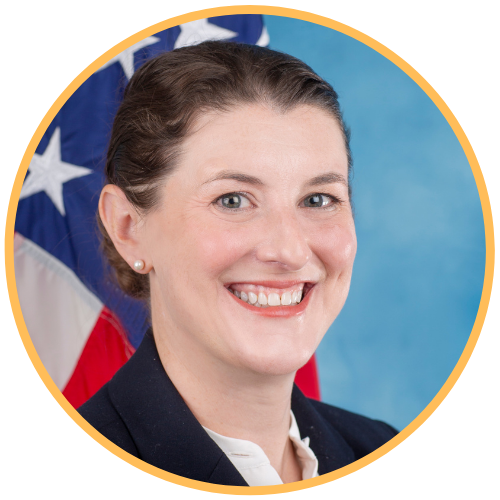 |
Meghan Guthorn
Vice President Candidate
Professional Bio
Meghan Ryan Guthorn is the new Deputy State Librarian and Chief of Collections and Archives at the Library of Virginia. She previously served as the Deputy Chief Operating Officer at the National Archives and Records Administration. Prior to this role, she worked in other positions and functions across the National Archives, including in textual accessioning (multiple roles) and the Still Pictures Branch (Branch Chief). At the National Archives she advocated for the adoption of DACS standards in description and the integration of analog and electronic records into a unified holdings management system, among other projects and priorities.
She holds an MLS and an MA (American History) from the University of Maryland, College Park, and a BA (History and English) from Boston College. Ms. Guthorn has been a Certified Archivist since 2017. Why is maintaining your CA important to you in 2026 and beyond?
This is an exciting and challenging time to be in an information management profession. As archivists, we have an opportunity to shape the information landscape and ensure that new tools – AI and otherwise – draw on true and authentic information. The public increasingly relies on information that is not independently sourced and verified. It is incumbent on archivists and allied professions to ensure that we are at the forefront of the development of information management tools.
The Certified Archivist credential documents traditional knowledge of the core tenants of the field and a commitment to continued learning and development. As we look to 2026 and beyond, it is incumbent on us as professionals to ensure that this credential serves as shorthand for a body of knowledge, skill at practice, and commitment to meeting the information management needs of the moment. Maintaining the Certified Archivist credential and ensuring that it continues to evolve to document the true nature and requirements of this profession is important to me because it stands for such a unique aggregation of skills – academic, practical and forward-looking. This credential is valuable shorthand that cuts across all of the professional pipelines where archivists can be found: federal government, state and local government, academia, the private sector. In a field where there are so many needs unique to the institutions we serve, and the budgets and requirements of those specific institutions, a credential that speaks to a common base of knowledge and expertise is incredibly valuable. |
Treasurer
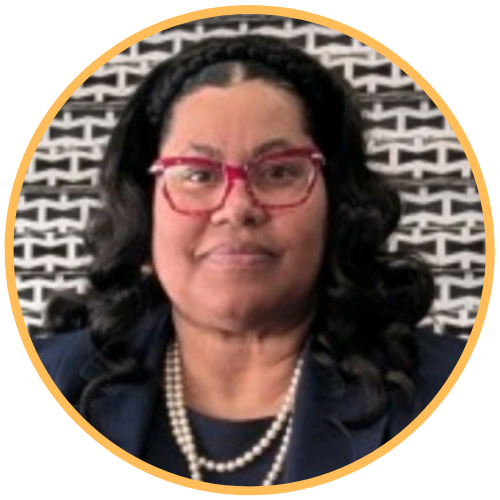 |
Jami Murphy
Treasurer Candidate
Professional Bio
Jami Murphy, MBA, MLIS, CA, is a Project Archivist at the Auburn Avenue Research Library on African American Culture and History in Atlanta, Georgia. She manages large-scale archival collections, including photographic materials, and leads initiatives in metadata creation, digitization, and access.
Before entering the archival profession, Jami held executive finance roles, including Chief Financial Officer and Controller, primarily within the nonprofit sector. Her work focused on financial management, audit preparation, compliance, and organizational strategy, with an emphasis on stewardship and accountability. She brings this experience to her archival work, with a focus on governance, sustainable workflows, and responsible management of collections. Jami is an active member of the Society of American Archivists and currently serves on its Finance Committee. She is also a member of the 2026 cohort of the Archives Leadership Institute. Why is maintaining your CA important to you in 2026 and beyond?
Maintaining my Certified Archivist (CA) credential is important to me because it reflects an ongoing commitment to professional standards, accountability, and continued growth within the archival field.
As the profession evolves in response to digital transformation, increasing volumes of information, and heightened expectations around access and stewardship, maintaining the CA ensures that I remain engaged with current practices and grounded in shared principles. It reinforces the importance of ethical responsibility, sound judgment, and consistency in how we manage and provide access to records and collections. My professional background includes both archival work and executive financial leadership. In both areas, I have seen the value of structured standards, transparency, and continuing education in building trust and supporting effective decision-making. Maintaining my CA aligns with those values and supports my ability to contribute meaningfully to the profession. Looking ahead, I view certification not as a one-time achievement, but as an ongoing responsibility. It provides a framework for staying informed, adapting to change, and upholding the integrity of archival practice in a complex and evolving information landscape. |
Regent for Exam Development
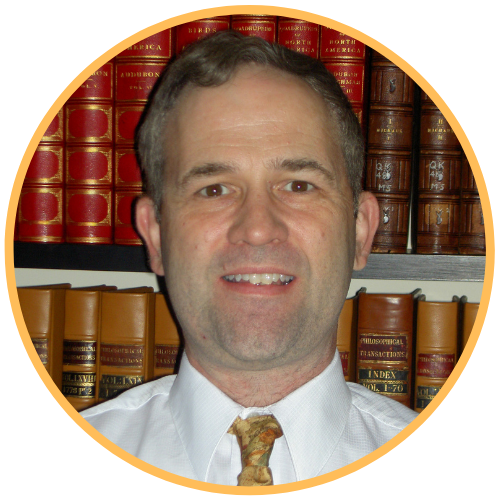 |
Mott Linn
Regent for Exam Development Candidate
Professional Bio
My experiences have prepared me well to be the Regent for Exam Development and to lead the Exam Development Committee. I served on the EDC for 2 years and twice helped to run the Item Writing Workshop, which helped to generate questions for the EDC. In addition, for my graduate degrees I took multiple statistics and research methodology classes, which gave me great insight into how to construct quality questions.
I have worked in academic, business, government, religious, and public library archives, which have provided me with diverse perspectives on the profession that will be valuable in creating our profession-wide exams. Because I have been ACA’s Treasurer and President, I am very familiar with how ACA functions. Additionally, because ACA awarded me the Distinguished Service Award, I have demonstrated my dedication to making ACA the best it can be. I have also served in numerous leadership positions in SAA. Why is maintaining your CA important to you in 2026 and beyond?
I continue to maintain my CA because being a Certified Archivist should be just as important for archivists as being Board Certified is imperative for doctors and having passed the bar exam is crucial for lawyers. Certification or licensure is needed for many professions and should also be expected for archivists. So, although my archival work is now done as a volunteer, I want to continue to show my commitment to the profession.
Another example of my dedication to archival certification is when I took charge of the archives at the Los Alamos National Laboratory, I was their first Certified Archivist. Because I value having archivists who have proven their competence, in less than three years we had grown to having ten CAs. As the supervisor, this allowed me to have confidence in their abilities. This is why I always want to hire CAs and encouraged my other archivists to become certified. Certification allows everybody involved (the employers, the researchers, and the archivists themselves) to be assured that the archivists involved are qualified. Certification is important not only because it proves via the exam that the CAs have the knowledge to be an archivist, but they also have to stay current with the profession because they have to recertify. Because of the critical role that the exam plays in determining who has and who does not have the competence to be an archivist, I pledge that I will do all I can to make the exam as good as possible. |
Regent for Outreach
 |
Hannah Pryor
Regent for Outreach Candidate
Professional Bio
Hannah Pryor is the Archivist for University Records & Records Manager at the University of Louisville, where she brings expertise built across both higher education and government settings, including her previous work as Senior Archivist at a state agency in Oklahoma. She holds a Master’s in Library and Information Science from the University of Alabama and has earned both the Certified Archivist (2020) and Certified Records Manager (2024) credentials.
At the University of Louisville, she is actively developing a records liaison network the connects her work with faculty, staff, administration, and student government representatives. She has also contributed to the professional community through service on the Midwest Archives Conference nominating committee (2025-2026), the NAGARA annual conference program committee (2024-2025), and as web developer for a university employee resource group (2024-2025). Why is maintaining your CA important to you in 2026 and beyond?
Since becoming a CA in 2020, the credential has strengthened my confidence in my abilities and helped me stay grounded in the core principles of our profession through continuing education. I renewed my certification this year and intend to continue doing so, both to honor the effort it took me to achieve it and to support the ACA’s continued development.
With the removal of previous qualification requirements, the ACA has become a more accessible pathway to professional credentialing and opened the door for more early-career archivists and those who entered the field through nontraditional routes. If elected as Regent for Outreach, I would build on this momentum by continuing to build awareness and engagement. |
Nominating Committee
 |
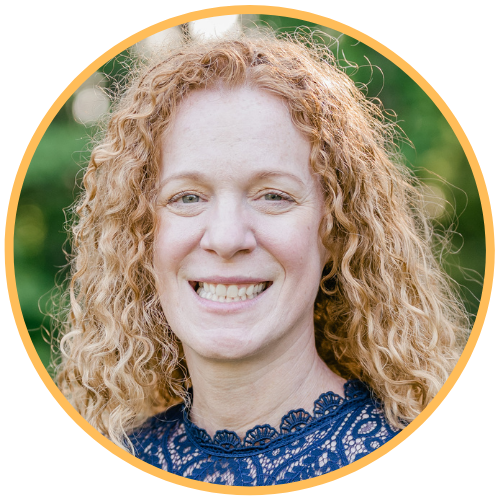
Grace Lu
Nominating Committee Candidate
Professional Bio
Grace Lu is a Certified Archivist and freelance archival consultant with an MLIS and a background in mathematics from UC Berkeley. She works with historical societies, museums, and cultural heritage organizations to assess, process, and preserve collections — bringing professional archival standards to institutions that need flexible, expert support. Her experience spans arrangement and description, preservation planning, and collections management, with a particular focus on making archival work accessible to smaller organizations navigating limited resources. Grace is committed to the long-term stewardship of the historical record and to growing a stronger archival community across the institutions she serves.
Why is maintaining your CA important to you in 2026 and beyond?
As a freelance archival consultant, my CA is one of the clearest signals I can offer to prospective clients that I bring rigorous, peer-validated expertise to their collections. Many of the organizations I work with — historical societies, small museums, community heritage organizations — are making a significant decision when they bring in outside help. The CA tells them, before we ever meet, that I’ve met a professional standard the field itself has set and continues to uphold.
But the credential means more to me than a line on a proposal. Maintaining it means staying current — returning regularly to the literature, the emerging conversations, the shifting landscape of digital preservation and access. The archival field is not static, and I don’t want to be either. The continuing education requirement built into the CA isn’t a hurdle; it’s a discipline I’ve come to value. There’s also a communal dimension. The ACA represents a community of practitioners who take the work seriously — who believe that what we do matters for the historical record and for the people who will depend on it. Remaining part of that community, renewing that commitment on a regular cycle, keeps me accountable not just to individual clients but to the profession as a whole. As I look toward future institutional roles, I want to arrive with a record of sustained engagement — not just a credential earned and set aside, but one actively maintained through every season of my career. |
 |
Anne Villarreal
Nominating Committee Candidate
Professional Bio
Anne (Callas) Villarreal has over 15 years of experience in libraries, archives, and records management, along with eight years in the U.S. Intelligence Community. She serves as a Collection Manager in the Office of Intelligence and Analysis, and has previously led records management and declassification initiatives at the National Security Agency, as well as managed library and archival operations for the American Society of Health-System Pharmacists.
Anne holds a Master of Library Science from SUNY Buffalo and a Bachelor of Business Administration from Ohio University, and is currently pursuing a Homeland Intelligence Certificate at the National Intelligence University. A native of upstate New York, she resides in Washington, D.C. with her husband. In her free time, she enjoys boutique fitness, following D.C. sports, and caring for her houseplants. Why is maintaining your CA important to you in 2026 and beyond?
I’ll be honest—I once considered letting my Certified Archivist (CA) credential lapse. Early on, I was highly engaged: attending conferences, presenting, and contributing my expertise. As my career aspirations within the U.S. Intelligence Community progressed, I began to question how relevant the certification was outside traditional archival settings.
Over time, that perspective changed. This past year, like many federal employees, I faced uncertainty that prompted me to reflect on my professional path. I was reminded of the effort required to earn both my Master of Library Science and CA certification—and of the flexibility and opportunity within the archival field. Maintaining my certification became less about a specific role and more about preserving a foundation I could continue to build upon, even in nontraditional spaces. Renewing my certification also renewed my commitment to the profession. The value of the CA is directly tied to engagement: continuing education, professional networking, and the exchange of knowledge. These opportunities are readily available—and essential for growth. Professionally, the CA designation reflects a commitment to the integrity, accessibility, and preservation of information—principles that are critical across sectors, particularly in government and national security environments. The credential not only validates technical expertise, but also reinforces a shared standard of excellence and accountability within the archival community. |
 |
Claire Jenkins
Nominating Committee Candidate
Professional Bio
Claire Jenkins currently works as a consultant in archives and records management. She has served as a Project Manager in the Office of Archives and Records for the Archdiocese of Atlanta; Director of Archives and Records for the Archdiocese of Atlanta; Director of Records Management and Archives for the Diocese of Fort Worth; Archivist for the University, Labor, and Political Collections at the University of Texas at Arlington Library Special Collections; and also Archivist at Texas Christian University Library Special Collections. She earned her Bachelor of Arts degree in history at Centenary College in Shreveport, Louisiana and her Master of Arts in Public History, with a concentration in museum studies, at the University of Arkansas at Little Rock. Ms. Jenkins is involved in ARMA International, the Society of American Archivists, and the Society of Southwest Archivists. Her credentials include Certified Archivist, Certified Records Manager, and Information Governance Professional.
Why is maintaining your CA important to you in 2026 and beyond?
Maintaining my Certified Archivist credential is enormously important to me. I first earned my CA, partially because I wanted to attain the certification but also because my new job required me to be certified or be willing to pursue it. I have always told people that the act of taking the test did not make me a better archivist – studying for the exam and all of its components did, though, and it showed me the areas that I excelled in (management), as well as the areas that were my weaker points (preservation). Throughout the years, maintaining my CA has been no easy feat, particularly after I started having children and then, due to my husband’s career, moving every few years. In the midst of all of that, I focused on what I considered to be utterly essential, and that included maintaining all of my professional certifications. I tell my children how important these credentials are to me and hope that my work will be an example to them. I know as time passes and the children become more independent, leaving me more time to focus on myself and my career, that I will need to have this certification to be relevant in the field. Right now keeping my CA forces me to be active in the field, and even in the last few years I am amazed at how much things have changed, particularly in the digital realm with implications from AI. I am proud to be a Certified Archivist!
|
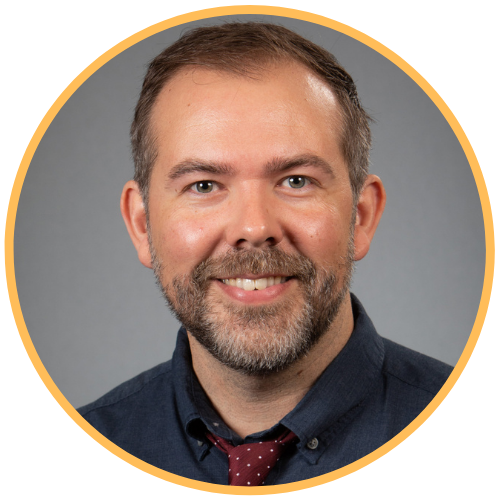 |
Weston Marshall
Nominating Committee Candidate
Professional Bio
Weston Marshall is Assistant Archivist of Field Acquisitions, Collection Development, and Outreach for the Southwest Collection/Special Collections Library in Lubbock, TX. He has a B.A. in History from Texas Tech University, a MS-LS in Archival Studies from University of North Texas, and has been certified by the Academy of Certified Archivists since 2024. Marshall serves as Assistant Editor for the West Texas Historical Review and is a committee member for the West Texas Historical Association Nominating Committee. He is a member of the Society of Southwest Archivists and is on the Internet Outreach Committee. He also serves on the Lubbock Heritage Society Board and frequently finds opportunities to volunteer locally, specifically with Lubbock Independent School District and YWCA of Lubbock. Marshall is committed to ensuring that archival practice is about building trust, encouraging participation, and making history relatable and meaningful.
Why is maintaining your CA important to you in 2026 and beyond?
Maintaining Certified Archivist status reflects an ongoing commitment to professional excellence, ethical practice, and continued learning. Certification signifies that I meet established standards in archival knowledge and practice, while also holding myself accountable to staying current in a field that continues to evolve. As new technologies, methodologies, and perspectives shape archival work, remaining certified ensures that I am actively engaging with emerging research and best practices. Equally important is the opportunity to stay connected with a broad and dynamic professional community. Through this network, I am able to exchange ideas, learn from colleagues, and contribute to conversations that strengthen the field. I value environments where multiple viewpoints are respected and where collaboration leads to thoughtful, inclusive practices. Maintaining certification also reinforces my dedication to responsible stewardship of records and to serving communities with care and integrity. It encourages me to remain adaptable and attentive, so archives can better represent and support a wide range of voices and experiences. Continuing as a Certified Archivist signifies a professional standard and a personal commitment to growth, connection, and meaningful contributions to the archival profession.
|